What’s the Difference Between Official and Novelty Diplomas?

What’s the Difference Between Official and Novelty Diplomas?
Understanding the difference between official vs novelty diplomas has become increasingly important in today’s global education and employment landscape. As more people pursue international careers and remote opportunities, verifying academic credentials is no longer a formality—it is a necessity. Moreover, with the rise of digital documents and online services, the line between legitimate academic records and unofficial replicas can sometimes appear blurred. Therefore, this article provides a clear, structured, and evidence-based explanation of how official diplomas differ from novelty or non-official ones, and how individuals and organizations can make informed decisions.
What Is an Official Diploma?
To begin with, an official diploma is a formal academic document issued by an accredited educational institution. It confirms that a student has successfully completed a program of study according to established academic standards.
Typically, official diplomas include:
- The full name of the institution
- The graduate’s name
- Degree title and field of study
- Date of issuance
- Authorized signatures and institutional seals
More importantly, official diplomas are backed by verifiable records maintained by the issuing institution. For example, organizations such as UNESCO emphasize the importance of recognized accreditation systems in ensuring the legitimacy of qualifications.
In addition, many countries maintain national qualification frameworks to standardize academic credentials and ensure quality assurance.
What Is Considered a Novelty Diploma?
On the other hand, a novelty diploma generally refers to a document that falsely claims to represent an academic qualification. However, it is important to distinguish between different categories.
Novelty diplomas may include:
- Documents issued by unaccredited or non-existent institutions
- Altered or forged certificates
- Unauthorized reproductions intended to mislead
Meanwhile, some documents are clearly labeled as replicas or novelty items. These are not necessarily “novelty” in a fraudulent sense, provided they are not used to misrepresent qualifications.
According to Federal Trade Commission, diploma mills and fraudulent credentials have been a long-standing concern, particularly in employment and immigration contexts.
Key Differences Between Official and Novelty Diplomas
1. Accreditation and Recognition
First and foremost, official diplomas are issued by accredited institutions. This means the institution has been evaluated by recognized authorities.
For example, accreditation bodies such as Council for Higher Education Accreditation maintain databases of recognized institutions.
In contrast, novelty diplomas often originate from institutions that lack proper accreditation or oversight.
2. Verifiability of Records
Another major difference lies in verifiability. Official diplomas can be confirmed through:
- University registrars
- Digital verification systems
- Third-party credential evaluation services
For instance, services like World Education Services allow institutions and employers to verify academic records.
By comparison, novelty diplomas typically cannot be verified through legitimate channels.
3. Purpose and Intended Use
Official diplomas are designed for:
- Employment qualification
- Academic progression
- Professional licensing
However, replica or non-official diplomas are often used for:
- Personal display
- Film or media production
- Educational demonstrations
Therefore, the intent behind usage plays a crucial role in determining whether a document is being used appropriately.
4. Design vs. Authenticity
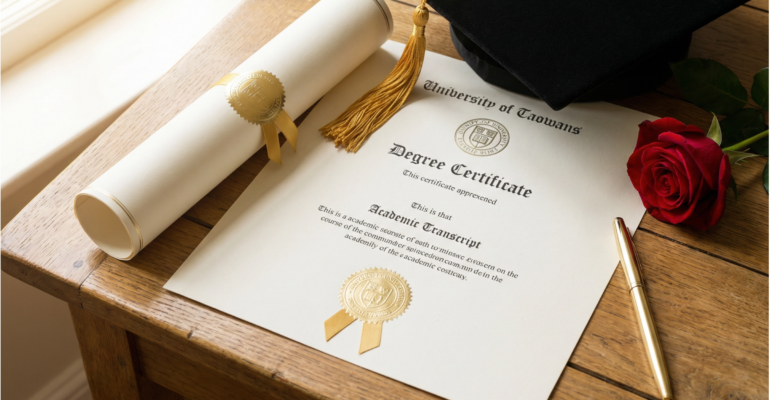
Interestingly, many novelty or replica diplomas may appear visually convincing. They often mimic:
- Institutional logos
- Typography and layout
- Signature placements
Nevertheless, visual similarity does not equate to legitimacy. Authenticity is determined by institutional records, not design alone.
Why the Distinction Matters
Understanding the difference between official vs novelty diplomas is essential for several reasons.
Firstly, employers rely on academic credentials to assess qualifications. According to Society for Human Resource Management, background checks frequently include education verification.
Secondly, using fraudulent credentials can lead to serious consequences, including:
- Job termination
- Legal penalties
- Damage to professional reputation
Moreover, in regulated professions such as healthcare or engineering, misrepresentation can pose public safety risks.
How to Verify a Diploma
Check Institutional Accreditation
To begin, verify whether the issuing institution is accredited. Many countries provide official databases. For example:
- National education ministries
- Accreditation agency websites
- International directories
Contact the Issuing Institution
In addition, most universities have registrar offices that can confirm whether a diploma was issued.
Use Credential Evaluation Services
Furthermore, third-party organizations can assess and validate international qualifications.
Examine Document Details
Finally, while not definitive, reviewing document features can help identify inconsistencies. These may include:
- Misspellings
- Incorrect formatting
- Missing institutional information
The Role of Replica Diplomas in Non-Official Contexts
It is also important to recognize that not all non-official diplomas are intended to deceive. In fact, replica diplomas can serve legitimate purposes when used responsibly.
For example:
- Film and television productions often require realistic academic props
- Designers and educators may use them for demonstration purposes
- Individuals may display them as part of personal collections
However, transparency is essential. Documents should never be used to misrepresent qualifications in professional or legal contexts.
Ethical and Legal Considerations
From an ethical perspective, honesty in representing academic credentials is fundamental. Moreover, many jurisdictions have laws that prohibit the use of fraudulent qualifications.
For example, the UK Government has addressed the issue of diploma fraud in employment and public service.
Therefore, understanding both the ethical and legal implications helps individuals avoid unintended risks.
Common Misconceptions About Novelty Diplomas
“If It Looks Real, It Must Be Valid”
In reality, visual appearance alone is not a reliable indicator of authenticity.
“All Replica Diplomas Are Illegal”
In fact, legality depends on usage. Replica documents used for display or creative purposes are generally acceptable.
“Verification Is Difficult”
On the contrary, verification has become increasingly accessible through digital systems and institutional databases.
Future Trends in Diploma Verification
Looking ahead, diploma verification is becoming more advanced. For instance:
- Blockchain-based credential systems
- Digital diplomas with secure verification codes
- Global credential databases
Organizations like European Commission are actively exploring digital credential frameworks to enhance transparency and security.
Consequently, the gap between official and novelty diplomas is expected to become easier to detect.
Conclusion
In summary, the difference between official vs novelty diplomas lies not only in appearance but in accreditation, verifiability, and intended use. While official diplomas represent recognized academic achievement, novelty or non-official documents lack institutional validation.
At the same time, replica diplomas can serve legitimate purposes when used responsibly and transparently. Therefore, understanding these distinctions enables individuals, employers, and educators to make informed and ethical decisions.