How to Identify Fake Diplomas and Certificates: Expert Tips

With the rise of online education, remote learning, and various certification programs, diplomas and professional certificates still play an important role in job applications, promotions, and career development. However, at the same time, fake diplomas and forged certificates have become increasingly common.
Many employers, HR professionals, and even individuals may face a practical question: How can you tell whether a diploma or certificate is genuine?
This article explores common signs of fake diplomas, how employers verify academic credentials, and when extra caution is necessary.

Why Fake Diplomas Are Becoming More Common
In the 2026 job market, academic credentials are still a basic requirement for many positions.
For example:
- Healthcare, education, and finance roles often require formal degrees
- Many companies still use education as an initial resume filter
- Certain professional roles require licenses or certified qualifications
Because education credentials still hold value, some individuals may attempt to use unverified or misleading certificates to appear more competitive.
At the same time, modern design software and printing technology can make some documents look very realistic, which makes identification more difficult.
Common Visual Signs of a Fake Diploma
Even when a document looks professional, there are often small details that reveal whether it is authentic.
1. Layout and Design Do Not Match the Institution
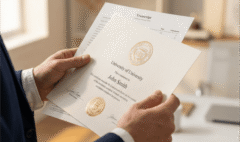
Most universities use a standard diploma design, which usually includes:
- Specific fonts
- Consistent layout structure
- Fixed placement of the university seal
- Official signature areas
If the layout appears inconsistent, poorly formatted, or unprofessional, it may raise concerns.
2. Incorrect School Name or Institutional Details
Fake certificates often contain small mistakes, such as:
- Misspelled university names
- Incorrect or outdated logos
- Non-existent departments or programs
- Degree titles that the institution does not offer
These details can usually be verified quickly through the university’s official website.
3. Missing Signatures or Official Elements
Most legitimate diplomas include formal elements such as:
- The signature of the university president or dean
- Registrar’s signature
- Institutional seal or embossing
- Official graduation date
If these elements are missing or appear generic, the document may require further verification.
4. Unusual Paper or Print Quality
Many official diplomas are printed on specialized certificate paper, which may include:
- Embossed textures
- Watermarks
- Security printing features
If a document appears to be printed on ordinary paper or has low-quality printing, it may be worth examining more closely.
How Employers Typically Verify Academic Credentials
Many people assume companies only glance at a diploma, but in reality, organizations often use more formal verification methods.
Common approaches include:
Contacting the university registrar’s office
Schools can confirm whether a student graduated and what degree was awarded.
Using credential verification services
Some employers work with third-party background screening agencies.
Reviewing official transcripts
Transcripts often provide more detailed academic records and are easier to verify.
In certain industries, credential verification is a standard part of the hiring process.
Situations Where Extra Caution Is Needed
Certain situations make credential verification especially important.
Highly Competitive Hiring Environments
When many candidates compete for limited positions, some individuals may exaggerate their academic background.
Regulated Professions
Fields such as:
- Healthcare
- Education
- Law
- Engineering
often have strict requirements for degrees and professional certifications.
Remote or Online Recruitment
In remote hiring situations, companies may not immediately see original documents, so background checks are often more thorough.
What Diplomas Really Represent
For many employers, diplomas represent more than academic knowledge. They often signal:
- Commitment and perseverance in completing a long-term goal
- Basic academic and communication skills
- The ability to meet deadlines and follow structured programs
This is one reason why, even in a skills-focused job market, academic credentials still carry weight.
How to Properly Store and Manage Your Academic Documents
Whether it is a high school diploma, university degree, or professional certificate, keeping your documents organized and accessible is important.
Simple steps include:
- Keeping digital scans of important documents
- Storing original certificates in a safe place
- Backing up important records
- Preparing a clean copy when needed for presentation
If an original certificate is lost or damaged, many people also keep a clean replacement copy for personal records or display, while official verification can still be completed through institutions or official transcripts when required.
Key Takeaways
As education pathways and hiring practices evolve, diplomas still play an important role in 2026—but verifying their authenticity has become increasingly important.
To identify potentially fake diplomas, consider:
- Checking whether the design matches the institution’s official format
- Verifying school names and degree details
- Looking for signatures, seals, and official elements
- Examining paper quality and printing
- Confirming credentials through universities or official channels when necessary
In today’s transparent information environment, genuine qualifications and real skills remain the most reliable advantages in the job market.
Whether you are an employer, job seeker, or educator, understanding how to evaluate academic credentials can help you make more informed decisions.